The drive up PCH from the Westside to Point Dume takes about forty minutes if you leave early enough. If you leave after 8, it takes an hour and a half and you'll hate yourself. So you leave early.
But you don't go straight there. You stop at Lily's Tacos first.
Lily's
Lily's Tacos is one of those places that doesn't need to be explained to anyone who's been there, and can't really be explained to anyone who hasn't. It's a small restaurant — not a taco stand, not a chain, not a pop-up that got written up in Eater and now has a forty-minute wait. It's a restaurant that a woman named Lily started in 1988, the same year I was born, and she's still there.
That's the thing about Lily's. She's still there. Every time I walk in, she greets me like I'm family. Not in a performative hospitality way — not the "welcome in!" that someone trained a hostess to say. In the way that someone who has been feeding people from the same kitchen for almost forty years actually greets people. She knows who comes in. She sees you. She says something. It's different every time but it always feels the same. Like you belong there.
She does this with everyone. I've sat at the counter and watched her greet a guy in a suit, then a construction crew, then a woman with two kids, and each time it's the same warmth but calibrated differently. That's not customer service. That's someone who built something real and has been showing up to it every single day for longer than I've been alive.
I get the breakfast burrito and a coffee. The burrito is perfect. Not "elevated" or "reimagined" or whatever word food writers use when they want to charge you twenty-two dollars for eggs in a tortilla. It's eggs, cheese, salsa, maybe some meat. It's good because the person making it has been making it since before you knew what a burrito was.
The coffee is just coffee. It's hot and it's strong. That's all it needs to be.
The drive
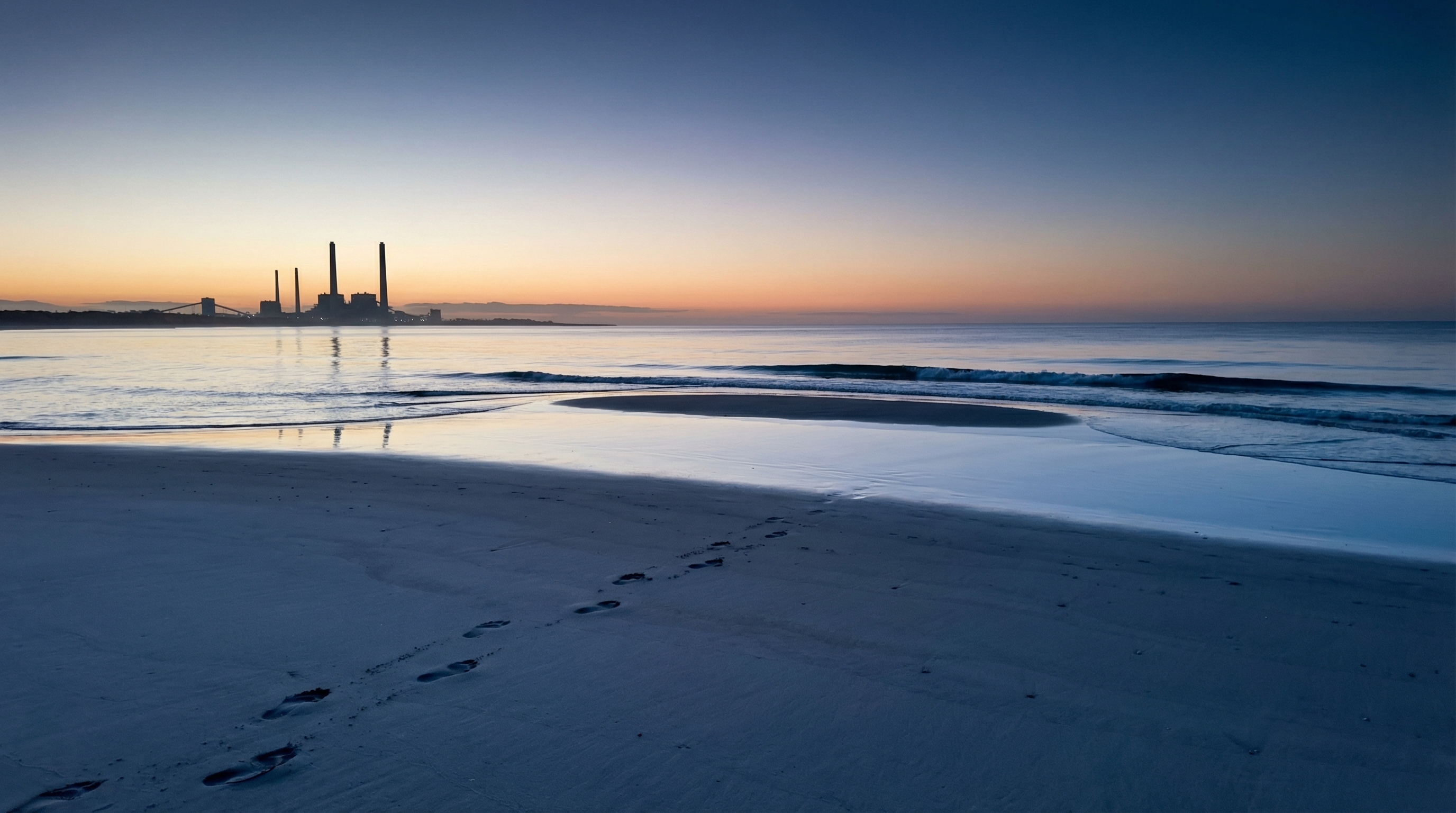
You eat the burrito in the car or you eat it at Lily's — either way, you're on PCH heading north by 7:15. The coast is on your left. The hills are on your right. Traffic is light. The marine layer is still sitting on the water like a gray blanket and the sun is working through it from behind.
This stretch of PCH — from Santa Monica through Malibu to Point Dume — is one of those drives that people fly across the world to do once, and I get to do it on a Tuesday morning because I live here. I try not to take that for granted. Some mornings I do anyway. But on the good mornings, I notice it.
You pass Pepperdine. You pass the Malibu pier. You pass the surf breaks that are either firing or flat depending on what the ocean decided to do overnight. You pass houses that cost more than you'll make in your life, pressed up against cliffs that are slowly falling into the sea. There's a metaphor there if you want one.
The bluff
Point Dume is a headland that sticks out into the Pacific like a fist. There's a nature preserve at the top with a trail that takes about ten minutes to walk. At the end of the trail, there's a bluff.
From the bluff, you can see Catalina Island on a clear day. You can see the entire arc of Santa Monica Bay behind you. You can see the kelp beds below, and if the water is clear, you can see the rocks on the bottom. In winter, you can sometimes see gray whales migrating south. They surface and blow and disappear and you stand there watching like it's the first time you've ever seen an animal.
On a Tuesday morning at 7:45, there's almost nobody up here. Maybe one person with a dog. Maybe a photographer. Usually just you.
I sit on the bench at the edge of the bluff and drink the rest of my coffee and look at the ocean and I don't think about anything in particular. I'm not meditating. I'm not journaling. I'm not having a breakthrough. I'm just sitting on a bench on a cliff above the Pacific with a coffee that's going cold, watching pelicans fly below me in a line.
Why this and not something else
People ask me what my morning routine is and I don't really have one. I don't have a cold plunge protocol or a supplement stack or a five-step journaling practice. Some mornings I surf. Some mornings I go to the gym. Some mornings I drive to Point Dume and sit on a bench.
What these mornings have in common is that I'm doing something before the day starts making demands. Before the phone starts buzzing. Before there's anything I'm supposed to be doing. There's a version of my life where I skip all of this and go straight to the screen, and I've lived that version, and it's worse.
The drive back down PCH takes longer because traffic has started. But you don't care, because you've already been to the edge of the continent and back, and you stopped at Lily's on the way, and Lily said something that made you feel like a person and not a consumer, and the pelicans were out, and the coffee was hot when it mattered.
Some mornings that's all you need.