I'm going to tell you about cold water, and I need you to know upfront that this is not one of those posts. I'm not going to cite a study. I'm not going to mention dopamine or norepinephrine or cold shock proteins. I'm not going to tell you that cold water changed my life and can change yours too if you just follow these five steps.
What I'm going to tell you is what happened when I started getting in cold water every morning for a year, and what I noticed, and what I didn't notice, and why I kept doing it.
How it started
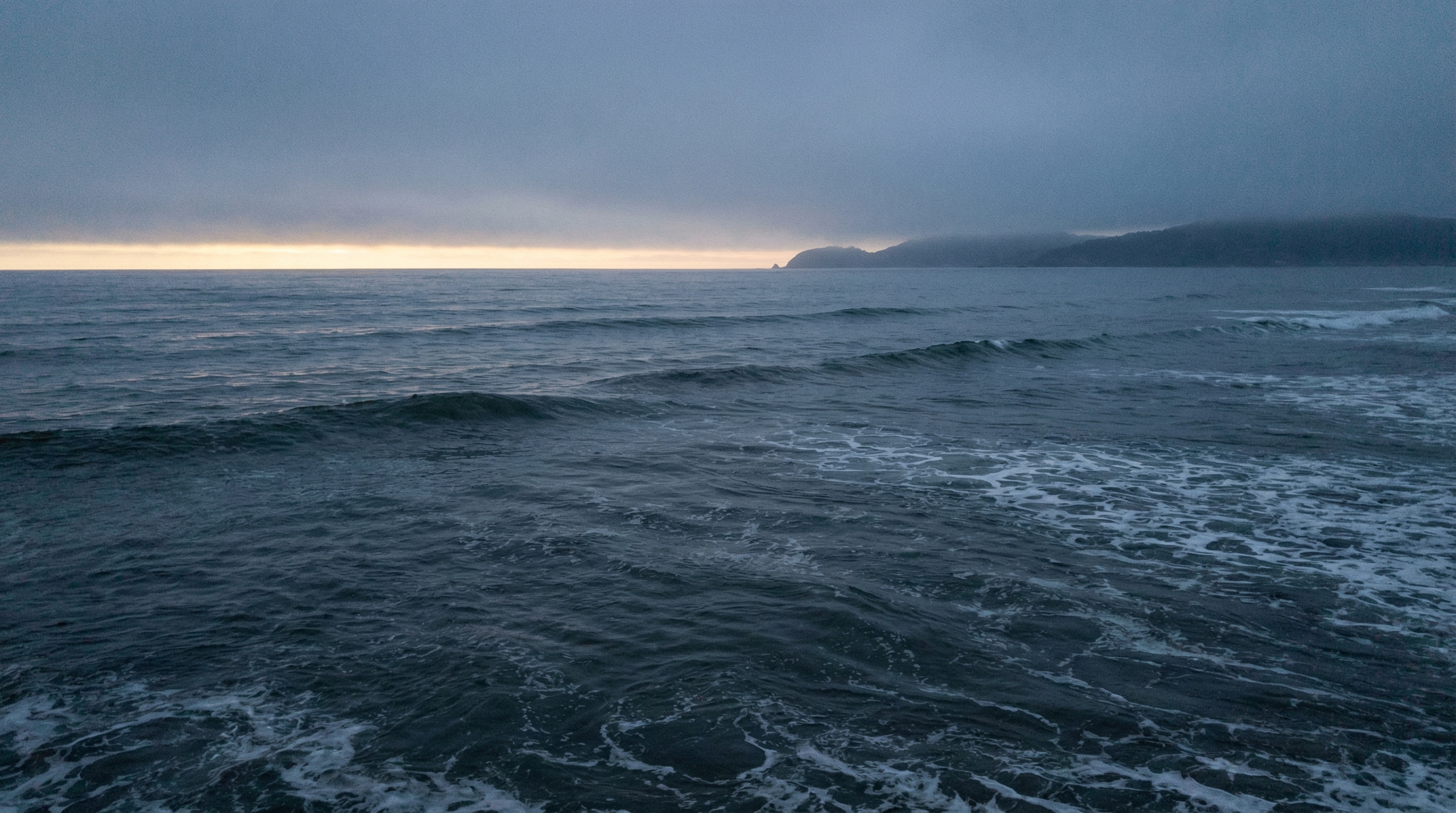
It started in the ocean, not a cold plunge. I was surfing at El Porto three or four mornings a week, and the water in January was around 56 degrees. If you've never been in 56-degree water, I'll save you the suspense: it hurts. Not immediately. For the first thirty seconds, it's bracing. Then your hands start to ache. Then your feet. Then there's a period of about two minutes where your body is loudly telling you to get out, and you have to decide whether to listen.
I kept not listening, and at some point in February, I noticed that the two-minute protest period had shortened. Not because the water was warmer. Because something in me had adjusted. The discomfort was still there, but the panic wasn't. My body had learned that cold water wasn't going to kill it.
On the days I didn't surf, I started taking cold showers. Not because I'd read about it or because someone told me to. Because I missed the way the mornings felt when they started with cold water, and I wanted that feeling on Tuesday and Thursday too.
The first month
The first month was mostly about the shower. I'd turn it to cold at the end and stand there for two minutes. Then three. Then five. The pattern was always the same: the first fifteen seconds were fine, the next thirty were awful, and then something released and it was fine again.
I don't know what that release is, physiologically. I'm sure someone could explain it. What it feels like is a switch flipping from "I want to escape" to "I am here." It's not pleasant, exactly. It's more like a reset — like everything that was running in the background of your mind gets force-quit, and you're left with a blank screen and the sensation of cold water on your skin and nothing else.
By the end of the first month, I was doing five minutes every morning without negotiating with myself about it. That was the first thing I noticed: I stopped negotiating. The cold shower wasn't a decision anymore. It was just the thing that happened after I brushed my teeth.
What changed, honestly
Here's what I can say with confidence after a year: I get sick less. I used to catch every cold that came through. In the past year, I've had one, and it lasted two days. I don't know if this is the cold water or the surfing or just coincidence. I'm not going to pretend I do.
I sleep better. Not dramatically better. But I fall asleep faster and I wake up feeling more alert. This started around month three and has been consistent since.
My skin looks different. Clearer. I don't know why. My hair is drier, which I didn't expect and don't love.
The mental stuff is harder to pin down. I'm calmer in the mornings. That much I'm sure of. The first hour of my day has a stillness to it that wasn't there before. Whether that's the cold water or just the fact that I have a consistent morning routine, I genuinely don't know.
What didn't change
My productivity didn't increase. I'm not sharper or more focused or any of the things that cold water evangelists promise. I still procrastinate. I still have days where I can't concentrate. Cold water didn't fix my brain. It just made my mornings feel different.
I didn't lose weight. I didn't gain some kind of superhuman resilience. I still get stressed. I still get anxious. I still have nights where I can't sleep. The cold water is not medicine.
What it is, I think, is a practice. Like surfing, or cooking, or any other thing you do regularly that doesn't have a clear ROI but that you keep doing because the doing of it matters to you.
The thing nobody tells you
The thing nobody tells you about cold water is that the hard part isn't the cold. The hard part is the moment before. The standing in front of the shower, knowing what's coming, and turning the handle anyway. Once you're in, your body does the rest. The adaptation happens. The breath stabilizes. The shock becomes background noise.
But that moment before — the voluntary choice to be uncomfortable — that's the whole thing. And it carries over, in small ways, to the rest of the day. Not in a dramatic, motivational-speaker way. In a quiet, barely noticeable way. You chose the hard thing once already today. The next hard thing is slightly less hard by comparison.
I don't want to overstate this. It's not transformation. It's not enlightenment. It's just a small daily proof that you can do something you don't want to do, and be fine on the other side of it. Repeated three hundred and sixty-five times, that proof accumulates into something that I'd call, for lack of a better word, steadiness.
A year later
It's February again. The ocean is 55 degrees. I was in it this morning at 6:30, sitting on my board, watching the sets come in from the west. My hands were numb. My feet were numb. A pelican flew past close enough that I could hear its wings.
I'll be in it again tomorrow. Not because I think it's making me healthier or more productive or more resilient. Because at some point in the last year, cold water stopped being something I did and became part of how I start the day. The same way coffee is, or brushing my teeth, or opening the blinds.
The habit doesn't feel like discipline anymore. It feels like gravity. And that, I think, is the only thing worth saying about it.